The LimbO Waterproof Protector is the best all-round choice for Achilles walking boot users — its wide neoprene seal accommodates most boots and seals above the boot on the thigh. Bloccs Full Leg is a strong alternative with natural rubber construction. For large boot users — such as those in a VACOped — removing the sole before fitting the cover reduces the boot's width significantly and makes fitting easier. Do not bear weight through the leg with the sole removed. Buy before your first shower — improvising with plastic bags is not a reliable solution.
What to Look For
Not all waterproof covers are designed for walking boots. Many are sized for plaster casts, which are considerably slimmer than a VACOped or moon boot. The key considerations for boot users are different from those for cast users.
Large walking boots — such as the VACOped — are significantly wider than most plaster casts and many standard walking boots. This creates a sizing challenge — the cover opening needs to accommodate the boot, not just the leg.
Removing the sole makes fitting much easier. On the VACOped, the sole detaches by pressing the buttons on both sides of the boot. With the sole removed, the boot is considerably slimmer and most full-leg covers will fit over it more easily. Other boot types may have removable components — check your boot's instructions.
Important: If you remove the sole for showering, do not put any weight through the booted leg. The sole provides the structural base for weight-bearing. Sit on a shower stool for the duration of the shower and replace the sole before standing.
The Comparison
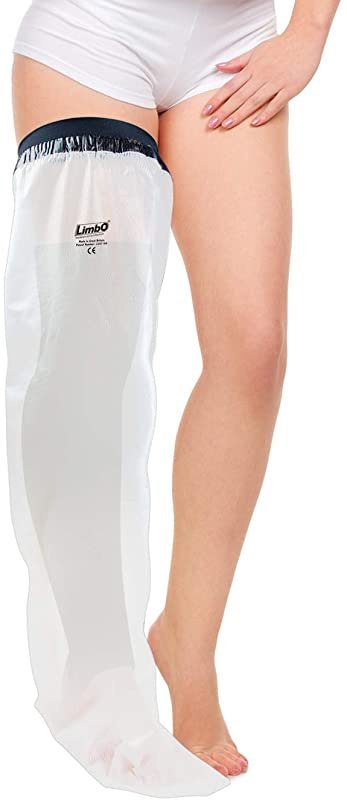
The LimbO is the most widely recommended waterproof protector in clinical settings — it is the product most often suggested by physical therapists and orthopedic nurses for boot wearers. Its wide neoprene seal is designed to sit on the skin well above the boot, creating a reliable barrier without the tourniquet effect that ring-seal products produce. The full-leg version extends from the toe to above the knee, covering the entire boot with length to spare for the seal to sit on the thigh.
The LimbO is manufactured to ISO 9001 standards and is CE marked as a Class 1 Medical Device — which matters if you are purchasing on the recommendation of a healthcare professional. It is latex-free, reusable, and designed to last through the average treatment period with daily use. Sizing is done by measuring the circumference of the thigh (where the seal will sit) and the length from heel to thigh — LimbO provides detailed size charts for each model. Choosing the right size is critical: measure carefully.
- Widely used and clinically recommended
- Wide neoprene seal — no tourniquet effect
- Latex-free and CE marked
- Full leg length suits walking boots
- Reliable daily use for full treatment duration
- Sizing is critical — measure carefully
- Higher price than generic alternatives
- VACOped with sole may need sole removed first
- Not recommended for swimming
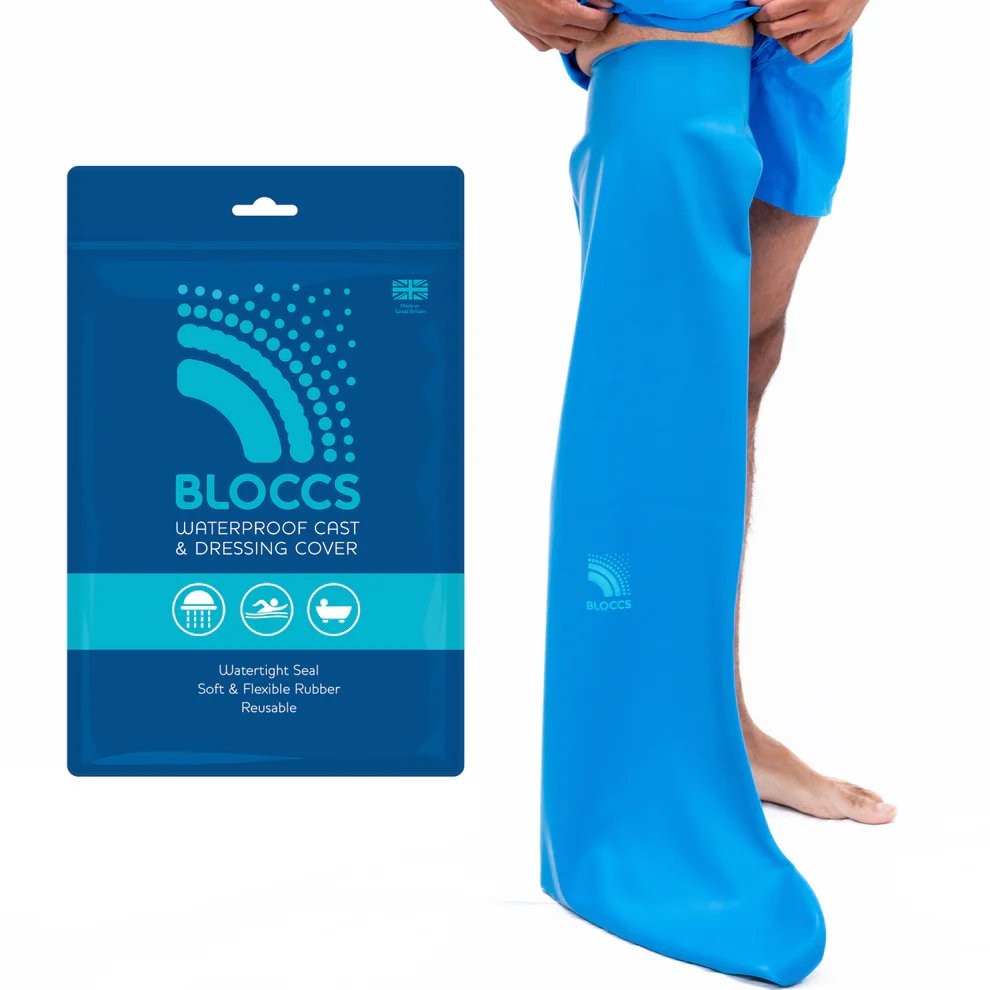
Bloccs is a strong alternative to LimbO, with natural rubber construction and a watertight seal rated for full submersion — making it the better choice if you want to use it for swimming or a bath rather than just showering. It is made in the UK and available in adult short and adult long leg versions; for walking boot users the long version is recommended. The rubber construction is flexible and durable, and the seal design sits above the boot on the thigh.
Sizing follows the same principles as LimbO — measure the thigh circumference where the seal will sit and the length from heel to thigh. The Bloccs short leg version is not recommended for walking boot users as it is unlikely to be long enough to seal above the boot. Choose the adult full leg.
- Fully submersible — suitable for swimming
- Natural rubber — durable and flexible
- Strong watertight seal
- Good alternative if LimbO not available
- Contains natural rubber — check for latex allergy
- Sizing critical — measure carefully
- Must choose full leg version for boot use
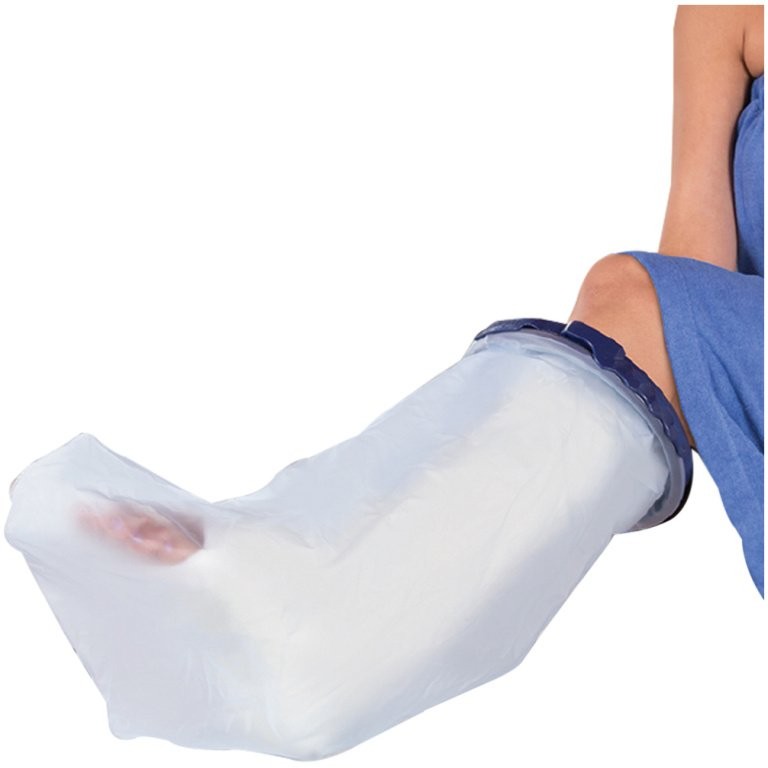
The SEAL-TIGHT Original uses a diaphragm seal design — similar in principle to the LimbO — and is entirely latex-free, making it the default choice for users with latex allergies. It is lighter and easier to apply than the LimbO and Bloccs, and can be fitted with one hand. However, it is primarily designed for cast and dressing use rather than walking boots, and the opening may be narrower than required for a full walking boot with sole attached.
SEAL-TIGHT is recommended for showering only — it is not rated for swimming or full submersion. For boot wearers, carefully check the sizing dimensions against your boot's widest measurement before purchasing. It is best suited to users with smaller boots or those who are removing the VACOped sole before showering.
- Completely latex-free
- Lightweight and easy to apply
- One-handed application
- Lower price point
- Shower use only — not for swimming
- Opening may not accommodate large boots
- Better for casts than walking boots
Side by Side
| Cover | Seal type | Latex-free | Submersible | Boot suitability |
|---|---|---|---|---|
| LimbO Full Leg | Wide neoprene | ✓ | Shower only | ✓ Excellent |
| Bloccs Full Leg | Natural rubber | Check product | ✓ Yes | ✓ Very good |
| SEAL-TIGHT | Diaphragm | ✓ | Shower only | Check sizing |
Practical Tips
Even with a good waterproof cover, there are a few things that make the showering experience significantly more reliable.
Before fitting the waterproof cover, wrap a small hand towel around the top of the boot — just below where the cover seal will sit on the thigh. If any water runs down your leg during the shower and reaches the top of the boot, the towel catches it before it can soak into the boot. A simple but effective precaution, particularly early in recovery when you are still learning how the cover fits.
Run your fingers around the entire neoprene or diaphragm seal after fitting to check it is lying flat against the skin with no folds or gaps. A single wrinkle in the seal is enough to allow water ingress. Take an extra 30 seconds to do this check every time — it is significantly less inconvenient than a wet boot.
Even a well-fitted cover benefits from not being directly in the water stream. Position yourself in the shower so the covered boot is to the side or rear, away from the main spray. Use a handheld shower head where possible — it gives you much more control over where the water goes.
Hang the cover upside down to air dry after each shower. Storing it while damp accelerates material degradation and can cause the seal to lose flexibility over time. Most covers are designed to last the full treatment duration with daily use — with proper care, they will.
Remove the liner sock immediately and allow it to dry completely before replacing. Open the boot straps and allow the boot interior to air dry as much as possible. If the padding becomes saturated, contact your treating team — a wet boot can cause skin maceration and is worth addressing promptly.
How to Fit It
The fitting sequence matters — getting this right each time is the difference between a dry boot and a wet one.
- 1If wearing a large boot such as the VACOped: remove the sole by pressing the buttons on both sides of the boot. Set the sole aside safely. Do not bear weight through the leg with the sole removed. Other boot types may also have removable components — check your boot's instructions.
- 2Wrap a small hand towel around the top of the boot as a precautionary water barrier.
- 3Slide the cover over the boot from the toe end, pulling it up toward the thigh. The toes should be at the pointed end of the cover.
- 4Ease the seal up past the boot and onto the bare skin of the thigh. The seal should sit directly on skin — not on the boot, the liner sock, or any fabric.
- 5Pull the cover down slightly so the seal reverses and faces upward, with the inner surface in direct contact with the thigh skin.
- 6Run your fingers around the entire seal perimeter to confirm it is lying flat with no folds or gaps.
- 7Shower seated on a stool. Keep the covered boot away from the direct water stream where possible.
- 8After showering, remove the cover and reattach the boot sole before standing or bearing any weight.
Common Questions
Can I use a plastic bag instead? A plastic bag and tape is a common improvised solution — and a commonly failing one. The tape does not seal reliably against wet skin, the bag can slip, and a leak means a wet boot and potentially a disrupted recovery. A proper waterproof cover costs $25–50 and is worth every dollar for 6–10 weeks of reliable daily use.
My cover leaked — what went wrong? The most common cause is a gap or fold in the seal, usually from rushing the fitting process. The second most common cause is choosing a cover that is too large — a cover that fits too loosely cannot seal reliably. Re-measure and check your size. Using the hand towel trick inside the cover provides a safety net while you refine your technique.
Can I shower with the boot off instead? If your protocol permits hygiene boot removal, showering with the boot off is an alternative — and avoids the cover fitting challenge entirely. See the hygiene guide for how to do this safely.
How long will the cover last? Most quality covers are designed for daily use over a standard treatment period of 6–10 weeks. With proper care — rinsing, air drying upside down, avoiding sharp objects — they should last the full duration without needing replacement.