Best Knee Scooters for Achilles Recovery
A knee scooter is one of the most important purchases you will make during Achilles rupture recovery. You will use it every day for 6–10 weeks. Here is a practical comparison of the best options across different use cases.
For most people recovering from Achilles rupture, the KneeRover All Terrain is the best all-round choice — it handles both indoor and outdoor surfaces, accommodates a walking boot comfortably, and is well-reviewed by post-surgical users. If you spend most of your time indoors, the Roscoe Medical is a strong alternative with a split knee rest designed specifically for use with a boot or cast. On a tight budget, the ELENKER is a solid entry-level option.
What to Look For
Not all knee scooters are the same. For Achilles recovery specifically, these are the features that matter most.
No knee scooter can handle stairs. If your home or workplace has stairs you cannot avoid, a hands-free crutch such as the iWALK 3.0 or Freedom Leg may be a better primary mobility solution. See the equipment guide for a full comparison of mobility options.
The Comparison
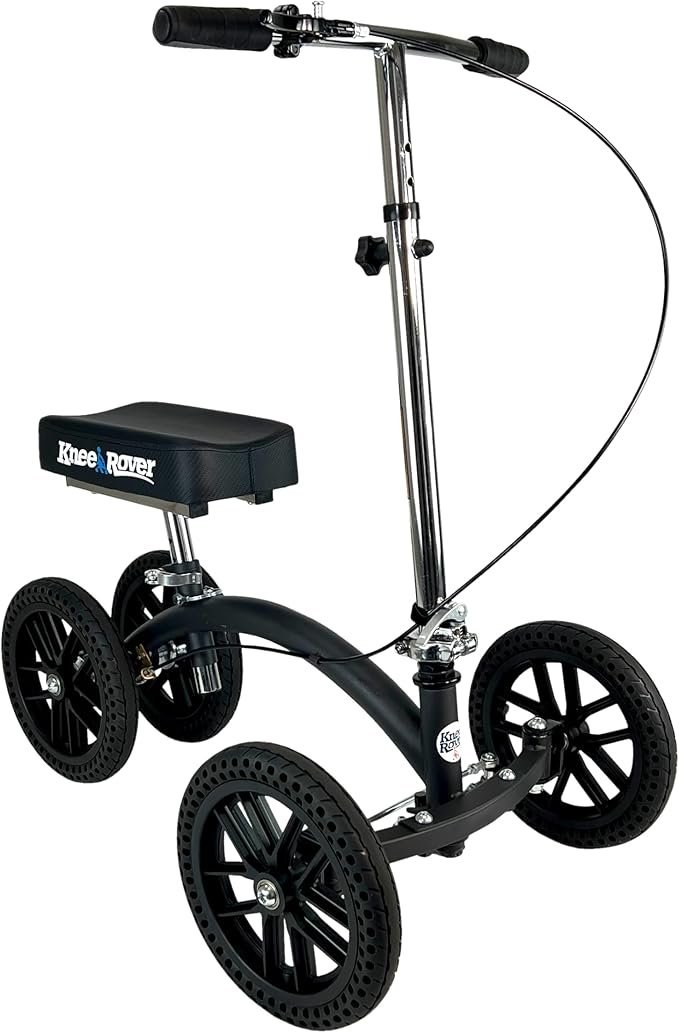
The KneeRover All Terrain consistently ranks as the best all-round knee scooter for post-surgical recovery. Its 12-inch pneumatic tires handle everything from smooth floors to cracked footpaths, gravel, and grass — which matters when you are navigating a 6–10 week recovery across real life. The tie-rod steering system keeps both front wheels working in sync, giving noticeably better stability than cheaper models when turning. The adjustable knee platform accommodates most walking boots and the locking handbrake allows hands-free standing.
- Handles outdoor terrain well
- Stable tie-rod steering
- Well-reviewed by surgical recovery users
- Accommodates most boot heights
- Wider turning radius indoors
- Heavier than budget models
- Higher price point
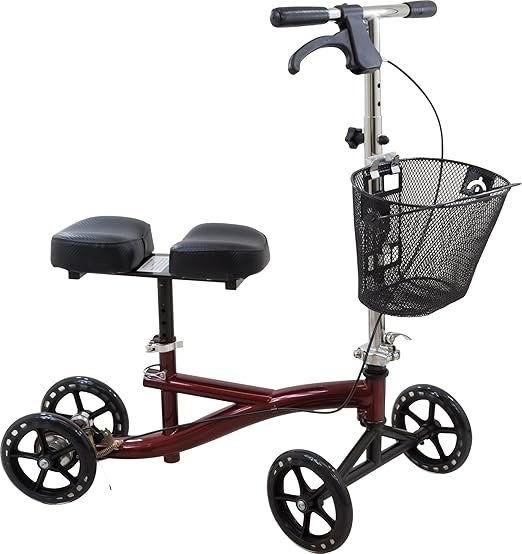
The Roscoe Medical stands out for one specific reason that matters to Achilles recovery patients: its split knee rest. The gap between the two pads allows the front lip of a cast or boot to sit in the space rather than pressing against the shin. The knee platform can also be offset left or right to keep your center of balance correct for each leg. This design detail is particularly relevant for VACOped boot users. Solid indoor performer, sturdy frame, easy tool-free assembly.
- Split rest ideal for boot wearers
- Offset platform improves balance
- High weight capacity
- Straightforward assembly
- Smaller wheels — less suited outdoors
- Brakes can be stiff for weak hands
- Knee rest height may not suit under 5'3"
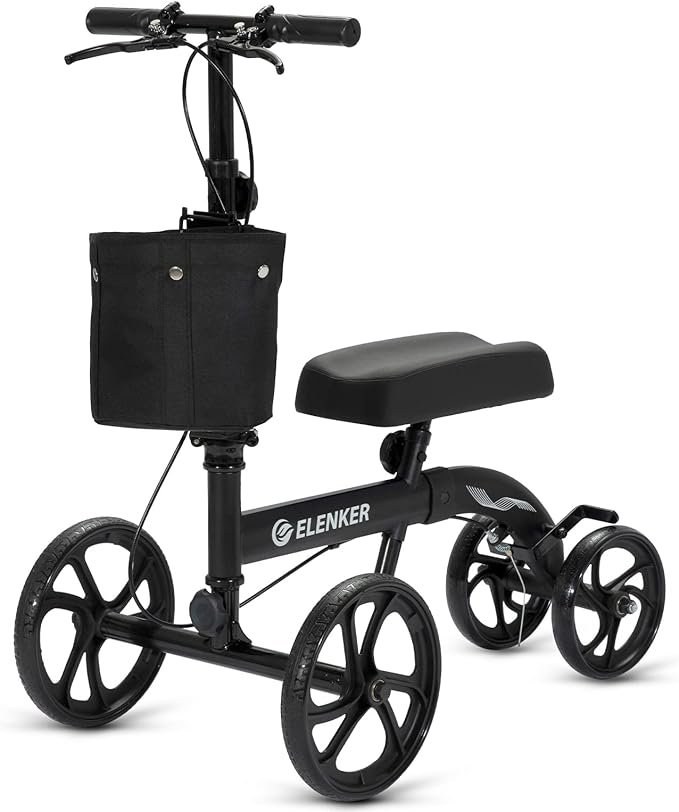
For those who need to manage costs, the ELENKER is a well-reviewed entry-level option with over 10,000 Amazon reviews averaging 4.3 stars. It handles indoor surfaces comfortably and the quick-fold mechanism makes transport manageable. The trade-off is smaller, harder PVC wheels that transmit more vibration on uneven surfaces — acceptable for a smooth-floored home or office, less ideal if you are navigating outdoor terrain regularly. A good option if your recovery is primarily indoor-based or your budget is limited.
- Significantly lower price
- 10,000+ reviews — well validated
- Quick fold for transport
- Works well on smooth indoor floors
- PVC wheels — rougher on uneven ground
- Thinner knee pad — may need cover
- Less stable on outdoor surfaces
Side by Side
| Model | Best for | Wheel type | Boot compatible | Foldable | Max load |
|---|---|---|---|---|---|
| KneeRover All Terrain | Indoor + outdoor | 12" pneumatic | ✓ | ✓ | 300 lbs |
| Roscoe Medical | Boot/cast wearers | 8" polyurethane | ✓✓ Split rest | ✓ | 350 lbs |
| ELENKER | Budget / indoor | 10" PVC | ✓ | ✓ | 300 lbs |
Common Questions
How long will I need a knee scooter? Most Achilles rupture patients use a knee scooter for 6–10 weeks, covering the non-weight-bearing phase and the early weeks of transitioning back to weight-bearing. Your surgeon or physical therapist will advise on your specific timeline.
Should I buy or hire? Buying gives you the freedom to use it whenever you need without hire deadlines or return logistics. If budget is a constraint, hire is available through most Australian pharmacies and medical equipment suppliers for approximately $30–60 per month.
Can I use a knee scooter with a VACOped boot? Yes — most knee scooters accommodate walking boots. The Roscoe Medical's split knee rest is particularly well-suited to boot wearers as it allows the boot lip to sit in the gap between the pads.
What about stairs? No knee scooter handles stairs. If you cannot avoid stairs in your home or workplace, consider a hands-free crutch such as the iWALK 3.0 as your primary mobility device, or discuss stair access arrangements with your treating team.