Footwear for Achilles recovery isn't one decision — it's a progression. The shoe that protects you coming out of the boot is not the shoe you want to be in five years from now. Staying in a high heel-drop shoe long-term keeps the posterior chain in a shortened position, which is one of the factors that increases Achilles vulnerability in the first place.

This guide is structured in three phases: what to wear immediately after the boot, what to transition toward during active rehab, and what the long-term target looks like once the tendon has fully remodelled.

Understanding Heel Drop
Why Drop Changes Everything

Heel-to-toe drop is the height difference between the heel and the forefoot in a shoe. A 10mm drop means the heel sits 10mm higher than the toes — tilting the foot forward and reducing how much the Achilles and calf have to work. Zero drop means heel and forefoot are level, as in barefoot walking.

Higher drop protects a healing Achilles by shortening the loading range. But the same mechanism that protects it short-term keeps the tendon and calf in a chronically shortened position if continued indefinitely — gradually reducing flexibility and strength through the full range of motion.

Phase 1
8–12mm
Out of the boot. Tendon still healing. Maximum protection.
Phase 2
4–6mm
Active rehab. Tendon strengthening. Gradual load increase.
Phase 3
0mm
Long-term. Full posterior chain engagement. Rebuild resilience.

Transition rule: Change drop by no more than 4–6mm at a time, spending at least 4–8 weeks at each level. After an Achilles rupture, be more conservative — discuss timing with your physiotherapist before stepping down.

Understanding Toe Box Geometry
The Toe Box — Three Dimensions That Matter

The toe box is the front section of the shoe that houses your toes. It has three distinct dimensions — and most shoes only address one of them. Understanding the difference helps you choose footwear that genuinely suits a recovering foot, particularly if swelling is present.

Dimension 1
Metatarsal width
Width at the ball of the foot — across the knuckle-like bones behind the toes. This is what "wide fit" sizing refers to. Important but not the whole story.
Dimension 2
Toe box width
Width at the toe tips themselves — further forward. A shoe can be wide at the ball but taper aggressively at the toes, compressing them together. This is the critical dimension for toe splay.
Dimension 3
Toe box height
Vertical clearance above the toes. Particularly relevant during recovery when foot swelling increases the volume of the forefoot upward.

Why it matters during recovery: Foot swelling post-boot commonly affects both the ball of the foot and the toes. A shoe that compresses the toes alters toe-off mechanics and loads the Achilles differently on every step. Toes that can splay freely also engage the intrinsic foot muscles — important for rehabilitation. Each shoe below is rated on its toe box in the spec row.

The hard reality — toe box and heel drop rarely come together. The brands that build genuinely wide, anatomical toe boxes — Altra and Topo — are philosophically committed to low or zero drop. The brands that offer high heel drop for early recovery protection — Brooks, ASICS, HOKA, New Balance — use conventional tapered lasts. There is currently no mainstream shoe that combines a 10–12mm heel drop with an anatomical toe box. You are choosing between two clinically desirable features and will likely have to compromise one for the other.

The two paths: Accept a narrower toe box and choose a high-drop Phase 1 shoe as recommended below — most people manage fine, particularly for the duration of early recovery. Or choose a shoe with an anatomical toe box and a lower drop, and use a heel lift insert to compensate for the reduced heel elevation. A Topo Phantom 3 (5mm drop) with a 10–12mm heel lift insert, for example, gives approximately equivalent Achilles protection to a 15–17mm drop shoe while maintaining a genuinely wide toe box. Sizing up half a size is usually necessary when adding a thick lift.

The wide fit caveat: Choosing the wide version of a conventional shoe addresses metatarsal width only — it does not reliably widen the toe box at the tips. For a full explanation of the three dimensions and how to assess any shoe — read our toe box guide →  ·  See heel lift options →

Phase 1
Out of the Boot — Maximum Protection
Weeks 8–20 approx
8–12mm drop · High cushion
Coming out of the boot is one of the most load-sensitive phases of recovery. The tendon has limited tensile strength and the calf has significant atrophy. The goal at this stage is not to train — it is to return to walking without setback. High-drop, maximum-cushion shoes reduce Achilles strain by shortening the effective range the tendon operates through, while rocker soles reduce peak loading at toe-off. These shoes are right for this phase. They are not the destination.
Men'sWomen's
Men's
Women's
Best Overall
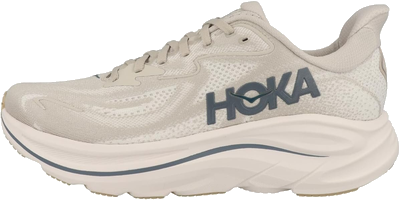
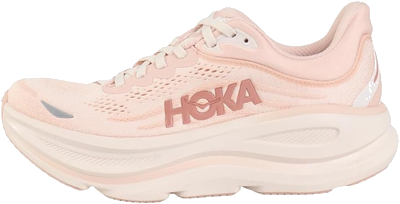
HOKA Bondi 9
Best for: most Achilles recovery situations · maximum cushioning · rocker sole
Drop4mm
Toe boxNarrow — wide/XW available
Stack39/35mm
RockerYes
Weight~280g

The Bondi 9 is one of the most commonly recommended shoes for Achilles recovery, and for good reason. The thick foam reduces peak ground reaction forces, the extended heel geometry protects the Achilles insertion, and the rocker sole means you reach toe-off with less plantarflexion range required from the tendon.

Strengths
  • Maximum cushioning and shock absorption
  • Rocker sole reduces Achilles load at toe-off
  • Stable, wide platform
  • Extended heel protects Achilles insertion
Limitations
  • 4mm drop — lower than many Phase 1 shoes
  • Not a long-term solution for tendon health
  • Bulky feel for some wearers
Men'sWomen's
Men's
Women's
Most Versatile
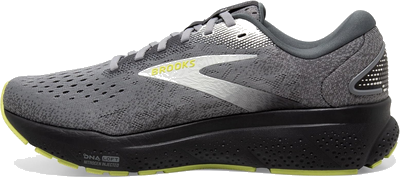
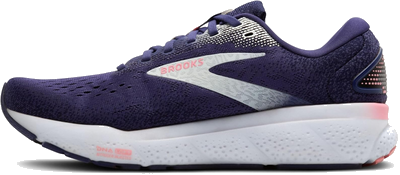
Brooks Ghost 16
Best for: everyday walking · comfortable transition shoe · 12mm drop
Drop12mm
Toe boxModerate — tapers at tips
Stack35/23mm
RockerMild
Weight~285g

The highest-drop shoe on this list at 12mm, the Ghost 16 maximally shortens the Achilles loading range — ideal for the earliest stages out of the boot when any load on the tendon feels significant. The DNA Loft v3 foam is soft and forgiving underfoot, and the fit is reliable and widely available in multiple widths.

Strengths
  • Highest drop (12mm) — maximum Achilles protection
  • Soft, forgiving cushioning
  • Available in multiple widths
  • Widely stocked, easy to try on
Limitations
  • 12mm drop reinforces shortened position long-term
  • No rocker geometry
  • Less ground feedback than lower-stack shoes
Men'sWomen's
Men's
Women's
Best Cushioning
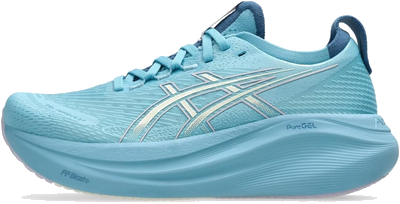
ASICS Gel-Nimbus 26
Best for: high-mileage walkers · superior shock absorption · 8mm drop
Drop8mm
Toe boxModerate — stretchy knit
Stack41/33mm
RockerMild
Weight~310g

The Nimbus 26 sits at a useful middle ground — 8mm of drop reduces Achilles loading without going to the extreme of 12mm. The FF Blast+ Eco foam and Gel cushioning make it exceptionally comfortable on longer walks, and the width options accommodate swelling that can persist during early recovery.

Strengths
  • Excellent shock absorption for longer distances
  • 8mm drop — good balance of protection
  • Gel technology at heel and forefoot
  • Multiple width options
Limitations
  • Heavy relative to other options
  • Higher stack can reduce proprioception
  • Not ideal for narrower feet
Men'sWomen's
Men's
Women's
Best Ride Quality
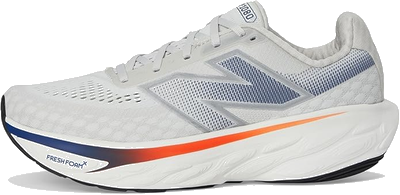
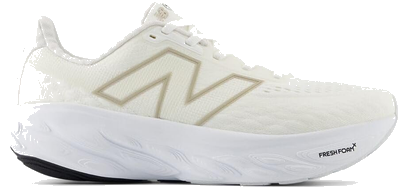
New Balance Fresh Foam X 1080v14
Best for: return to running · plush feel · 6mm drop
Drop6mm
Toe boxNarrow — wide available
Stack38/32mm
RockerMild
Weight~285g

The 1080v14 sits at 6mm drop — slightly lower than the others in Phase 1, making it a natural bridge into Phase 2 territory. The Fresh Foam X midsole is exceptionally plush, the toe-off feel is smooth, and it handles the transition back to running better than the Bondi or Ghost. A good choice once early walking is established and return to running is beginning.

Strengths
  • Excellent for early return to running
  • 6mm drop — bridges Phase 1 and 2
  • Plush, smooth ride quality
  • Responsive Fresh Foam X midsole
Limitations
  • Less Achilles protection than 12mm options
  • Premium price point
  • Can feel soft/unstable for some
Men'sWomen's
Mens
Womens
Maximum Cushion
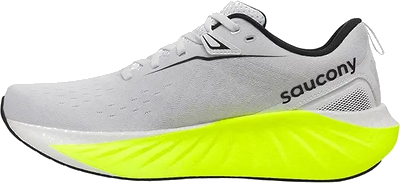
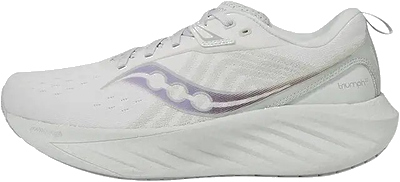
Saucony Triumph 22
Best for: plush ride, everyday walking, PWRRUN PB foam, 10mm drop
Drop10mm
Toe boxModerate — adequate width
Stack37/27mm
RockerMild
Weight~250g

The Triumph 22 is Saucony's maximum cushion flagship. PWRRUN PB foam provides exceptional cushioning and energy return at 10mm drop - within the Phase 1 range while feeling lighter than the Bondi or Ghost. A strong choice for those who want maximum cushioning without the platform feel of HOKA.

Strengths
  • 10mm drop - within Phase 1 range
  • PWRRUN PB foam - exceptional cushioning
  • Lighter than most max-cushion options
  • Versatile for casual wear
Limitations
  • No rocker sole geometry
  • Less heel protection than extended-heel designs
  • Premium price point
Men'sWomen's
Mens
Womens
Stability
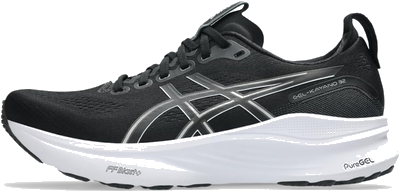
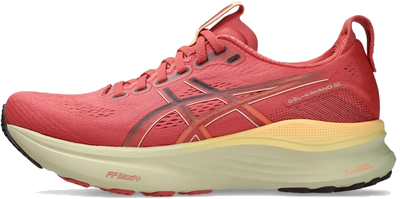
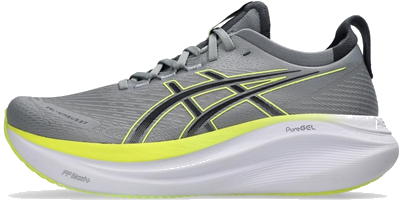
ASICS Gel-Kayano 32
Best for: stability, overpronation, 4D guidance, 10mm drop
Drop10mm
Toe boxModerate — wide available
Stack40/30mm
SupportStability
Weight~310g

The Kayano 32 is ASICS's premier stability shoe. The 4D GUIDANCE SYSTEM provides adaptive stability, FF BLAST PLUS foam delivers generous cushioning, and PureGEL rearfoot technology is notably softer than previous versions. If you overpronated before injury, the Kayano 32 is the Phase 1 stability recommendation over the neutral Nimbus 26.

Strengths
  • 10mm drop - within Phase 1 range
  • 4D Guidance System - adaptive stability
  • PureGEL rearfoot - softer heel landing
  • High stack for impact absorption
Limitations
  • Heavier than neutral options
  • Stability not needed for all patients
  • No rocker geometry
Men'sWomen's
Nike Pegasus 41 Men's
Nike Pegasus 41 Women's
Most Recognisable
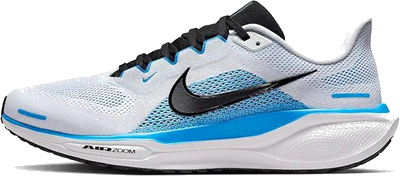
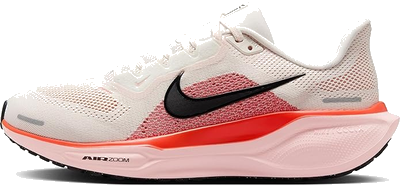
Nike Pegasus 41
Best for: familiar brand · 10mm drop · ReactX foam · wide version available
Drop10mm
Stack36/26mm
RockerMild
Weight~270g
Toe boxModerate — tapers at tips

The Pegasus is Nike's iconic daily trainer — one of the most recognisable running shoes in the world. At 10mm drop the Pegasus 41 sits comfortably within the Phase 1 recovery range. The dual Air Zoom units and ReactX foam midsole provide reliable cushioning underfoot. The wide version is available and recommended for recovery patients experiencing foot swelling. The toe box does taper toward the tips — if toe box width is a priority, consider the Topo Phantom 3 instead. A solid option for those who want a familiar, trusted brand during recovery.

Strengths
  • 10mm drop — within Phase 1 range
  • Widely available for in-person fitting
  • ReactX foam — reliable cushioning
  • Wide version available for swollen feet
Limitations
  • Toe box tapers at tips — not anatomical
  • No rocker sole geometry
  • Not the widest option in Phase 1
When to move from Phase 1 to Phase 2: Once you are walking comfortably for 30+ minutes without symptom flare-up and your physiotherapist has cleared progressive loading, it is appropriate to begin introducing lower-drop footwear. Do not rush this. Spend at least 4–8 weeks in Phase 2 shoes before reducing drop further. Start by wearing Phase 2 shoes for short durations alongside your Phase 1 shoes, increasing Phase 2 time progressively over weeks.
Phase 2
Active Rehab — Rebuilding the Posterior Chain
Months 4–12 approx
4–6mm drop · Moderate cushion
Phase 2 footwear introduces more demand on the Achilles and calf while maintaining enough cushioning to protect a tendon that is still consolidating. A 4–6mm drop requires more plantarflexion range at toe-off than Phase 1 — the Achilles and calf start working through a slightly fuller range, gradually rebuilding strength and flexibility. This is where the posterior chain begins to recondition. Take at least 8 weeks at this drop before moving lower.
Men'sWomen's
Men's
Women's
Phase 2 — Start Here
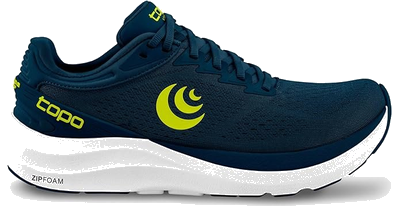
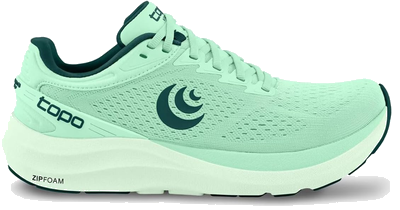
Topo Athletic Phantom 3
Best for: transition from Phase 1 · wide toe box · 5mm drop
Drop5mm
Toe boxWide — anatomical shape
Stack33/28mm
Weight~267g

The Phantom 3 is an ideal first step down from high-drop Phase 1 shoes. At 5mm, it introduces slightly more Achilles loading without the shock of going directly to 4mm or below. The wide, anatomically shaped toe box allows the toes to spread naturally — important for foot intrinsic muscle rehabilitation — and the dual-density ZipFoam provides real cushioning with enough firmness to maintain ground feel.

Strengths
  • 5mm drop — gentle step down from Phase 1
  • Wide anatomical toe box for natural foot function
  • Well-cushioned but not soft or unstable
  • Durable for extended daily use
Limitations
  • Less widely available than major brands
  • Wide toe box may not suit narrower feet
  • Midsole slightly firm for some preferences
Men'sWomen's
Men's
Women's
Phase 2 — Running Return
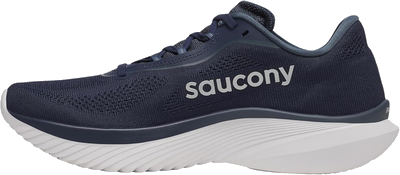
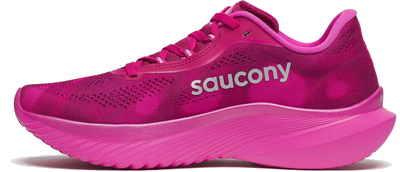
Saucony Kinvara 15
Best for: return to running · speed work · 4mm drop
Drop4mm
Toe boxModerate-narrow — snug fit
Stack29/25mm
RockerNo
Weight~200g

The Kinvara 15 is the lightest, lowest-drop shoe in Phase 2 — a step closer to the long-term target. At 4mm with a lower stack height than most cushioned trainers, it provides real ground contact and demands more from the posterior chain. Best introduced after several weeks in the Phantom 3, and initially for shorter runs and speed work rather than long easy miles. The flat (non-rockered) geometry means the foot and Achilles do more of the work — which is the point.

Strengths
  • 4mm drop — closer to long-term target
  • Lightweight for speed work and shorter efforts
  • Good ground feel for proprioception
  • Proven 15-version lineage
Limitations
  • Less cushioning — not ideal for long easy runs yet
  • 4mm demands real Achilles/calf engagement
  • Not a max-cushion recovery shoe
Men'sWomen's
Mens
Womens
Phase 2 - Versatile
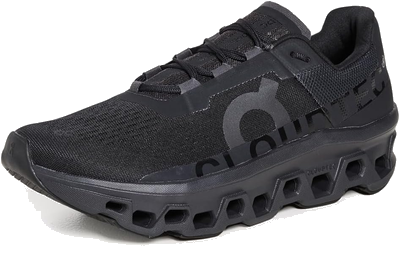
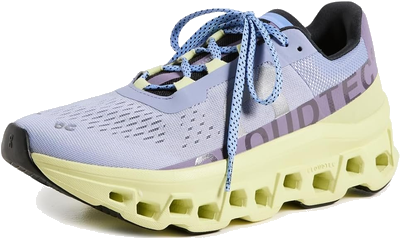
On Cloudmonster 2
Best for: versatile training, road and gym, forefoot rocker, 6mm drop
Drop6mm
Toe boxModerate — normal width
Stack38/32mm
RockerForefoot
Weight~265g

The Cloudmonster 2 is On's maximum cushion shoe. The biggest CloudTec pods provide excellent impact absorption while the Helion midsole adds energy return. At 6mm drop with a forefoot rocker it sits between the Topo and Kinvara, engaging the posterior chain more than Phase 1 shoes while offering significant cushioning. Stylish enough for gym and everyday use as well as running.

Strengths
  • 6mm drop - solid Phase 2 position
  • Forefoot rocker aids smooth toe-off
  • Maximum CloudTec cushioning
  • Stylish for casual and gym use
Limitations
  • CloudTec less stable on uneven surfaces
  • Premium price point
  • Heavier than Kinvara
When to move from Phase 2 to Phase 3: Phase 3 (zero drop) should only be introduced once you have full single-leg calf raise capacity on the injured side, can run 30 minutes comfortably in Phase 2 shoes without symptom flare, and have been running consistently for at least 3–6 months post-clearance. This is typically 12–18+ months post-injury. Start with zero-drop shoes only for walking, wearing them alongside Phase 2 running shoes for many months before using them for running.
Phase 3
Long-Term — Rebuilding for Life
12–18+ months post-injury
0mm drop · High stack option
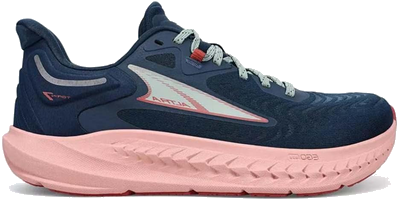
Zero drop is the long-term goal — not because it's fashionable, but because it positions the foot as it was designed to operate. The heel and forefoot at equal height means the Achilles and calf work through their full functional range on every step, building strength, flexibility, and resilience over time. The Altra Torin 7 is the recommended entry point to zero drop post-Achilles rupture because it pairs zero drop with maximum cushioning — reducing impact while allowing the posterior chain to begin functioning naturally. Transition extremely gradually. Zero drop after an Achilles rupture is a multi-year project, not a destination reached in months.
Men'sWomen's
Men's
Women's
Phase 3 — Long-Term
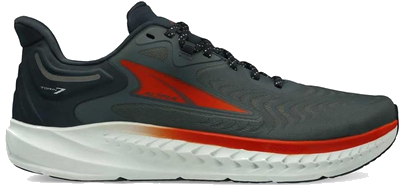
Altra Torin 7
Best for: zero-drop introduction · maximum cushion · wide toe box
Drop0mm
Toe boxWide — FootShape design
Stack30/30mm
Weight~280g

The Torin 7 is Altra's neutral daily trainer and the most recommended entry point to zero-drop running after injury recovery. The 30mm of EGO Max foam underfoot provides genuine cushioning protection while the heel and forefoot sit at exactly the same height — the foot is in its natural, balanced position on every step. The wide FootShape toe box allows the toes to splay and engage the foot's intrinsic muscles. This is the shoe for when the tendon is strong, training is consistent, and the goal shifts from recovery to long-term resilience.

Strengths
  • Zero drop — trains full posterior chain range
  • Maximum cushioning at zero drop (rare combination)
  • Wide FootShape toe box — natural toe splay
  • APMA Seal of Acceptance for foot health
Limitations
  • Requires very gradual transition — not for early recovery
  • Zero drop significantly increases Achilles demand
  • Wide toe box not suited to all foot shapes
  • Durability reports vary between versions
Trail
Trail & Hiking - Return to Off-Road
Phase 3 equivalent - Off-road use
Once road running is re-established
Return to trail running or hiking requires the same phased thinking as road running. Only introduce trail footwear once road running is re-established and the tendon has demonstrated consistent load tolerance. The Cascadia 17 at 8mm is the most conservative option and appropriate for hiking before running returns. The Speedgoat and Lone Peak suit progressively later phases.
Men'sWomen's
Mens
Womens
Trail - Start Here
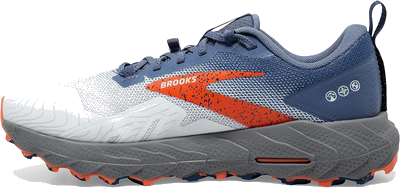
Brooks Cascadia 17
Best for: hiking, all-terrain trail, 8mm drop, most conservative trail option
Drop8mm
Toe boxModerate — standard trail
Stack32/24mm
OutsoleTrailTack Green
Weight~320g

At 8mm drop the Cascadia 17 is the most conservative trail option - right for walking trails during recovery before running returns. The Trail Adapt System provides stability over variable terrain and DNA LOFT v2 midsole offers good cushioning for longer days on foot. Versatile for hiking and trail running, appropriate earlier in recovery than lower-drop trail alternatives.

Strengths
  • 8mm drop - most conservative trail option
  • Trail Adapt System - stability on varied terrain
  • Suitable for hiking before running returns
  • Durable TrailTack outsole
Limitations
  • Less cushioning than HOKA Speedgoat
  • Heavier than performance trail options
Men'sWomen's
Mens
Womens
Trail - Best Overall
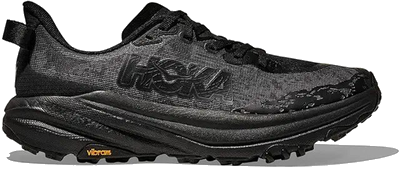
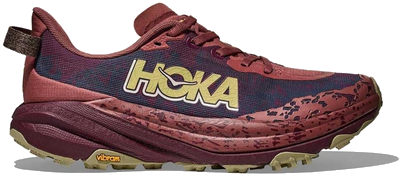
HOKA Speedgoat 6
Best for: technical terrain, maximum trail cushion, Vibram outsole, 4mm drop
Drop4mm
Toe boxNarrow — wide available
Stack32/28mm
OutsoleVibram Megagrip
Weight~295g

HOKA's flagship trail shoe - maximum cushioning combined with Vibram Megagrip outsole for technical terrain. The same protective HOKA platform that makes the Bondi appropriate for road recovery translates well to trail. At 4mm drop introduce it once road running is re-established. Vibram outsole significantly reduces lateral instability risk on uneven surfaces.

Strengths
  • Maximum HOKA cushioning for trail
  • Vibram Megagrip - superior traction wet and dry
  • Protective rock plate underfoot
  • Stable wide platform
Limitations
  • 4mm drop - not for early trail return
  • Heavier than most trail shoes
Men'sWomen's
Mens
Womens
Trail Phase 3
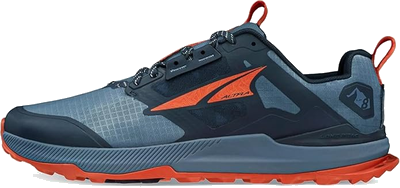
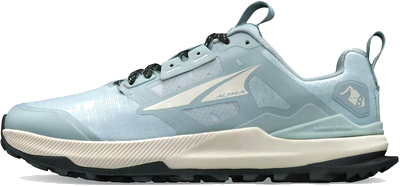
Altra Lone Peak 8
Best for: long-term trail goal, zero drop, wide toe box, hiking and running
Drop0mm
Toe boxWide — FootShape design
Stack25/25mm
OutsoleMaxTrac + TrailClaw
Weight~280g

The trail equivalent of the Altra Torin - zero drop, wide FootShape toe box, MaxTrac outsole and TrailClaw lugs for grip. Like the Torin, this is a long-term goal shoe. Introduce it for hiking first, alongside Phase 2 trail shoes, before using for running. The Lone Peak is popular for ultra-distance and thru-hiking precisely because zero drop over long distances causes less cumulative posterior chain fatigue than raised-heel alternatives.

Strengths
  • Zero drop - long-term posterior chain development
  • Wide FootShape toe box - natural toe splay
  • Versatile for trail running and hiking
  • Proven ultra and thru-hike record
Limitations
  • Zero drop - not for early trail return
  • Less cushioning than Speedgoat
  • Gradual transition required
Casual
Smart & Casual - Back to Work and Life
All phases - Daily wear
Prioritise rocker sole and drop
One of the least-discussed aspects of Achilles recovery is what to wear to work and everyday life. Standard dress shoes are almost universally inappropriate - flat, stiff, low-drop, and often tight. The options below prioritise the same clinical features as the running shoes: adequate heel drop, a rocker sole where possible, and enough width and cushioning to accommodate a recovering foot.
Men'sWomen's
Mens
Womens
Best Hands-Free
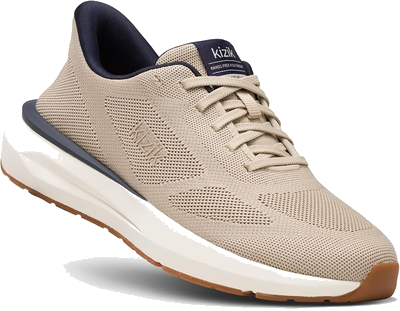
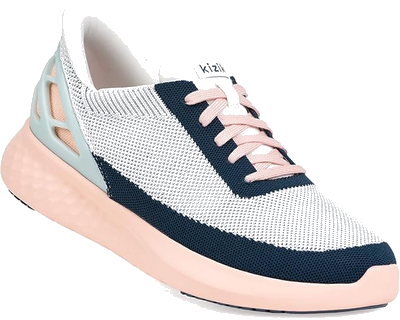
Kizik Athens 2
Best for: hands-free entry, work and casual, rocker sole, all recovery phases
Drop~8mm
Toe boxModerate-wide — roomy
StackN/A
RockerYes
WeightN/A

Kizik's hands-free entry system is genuinely useful during Achilles recovery - bending down to put on shoes is difficult when non-weight-bearing, and the cage mechanism lets you step straight in without hands or heel crushing. The Athens 2 has a rocker sole, adequate cushioning, and looks that work in most casual and smart-casual settings. Wide toe box options available. One of the most practical everyday shoes across all phases of recovery.

Strengths
  • Hands-free entry - critical during early recovery
  • Rocker sole - reduces Achilles push-off demand
  • Smart-casual appearance suitable for work
  • Wide toe box options available
Limitations
  • Not a running or sport shoe
  • Cage mechanism takes some getting used to
All Shoes at a Glance
ShoeSectionDropStack (H/F)Toe boxBest forApprox price
Brooks Ghost 16Phase 112mm35/23mmModerate — tapers at tipsEarliest post-boot walking, max protection~$140
ASICS Gel-Nimbus 26Phase 18mm41/33mmModerate — stretchy knitLonger walks, superior shock absorption~$160
HOKA Bondi 9Phase 14mm39/35mmNarrow — XW availableMost situations — rocker + max cushion~$165
Saucony Triumph 22Phase 110mm37/27mmModerate — adequate widthPlush cushioning, lighter alternative to Bondi~$160
ASICS Gel-Kayano 32Phase 110mm40/30mmModerate — W availableStability, overpronation, 4D guidance~$160
Nike Pegasus 41Phase 110mm36/26mmModerate — tapers at tipsFamiliar brand, wide version available~$130
NB Fresh Foam 1080v14Phase 1→26mm38/32mmNarrow — W availableReturn to running, bridges Phase 1 and 2~$165
Topo Athletic Phantom 3Phase 25mm33/28mmWide — anatomicalFirst step down, daily training~$145
On Cloudmonster 2Phase 26mm38/32mmModerateVersatile training, forefoot rocker~$170
Saucony Kinvara 15Phase 24mm29/25mmModerate-narrowSpeed work, shorter runs, closer to zero~$120
Altra Torin 7Phase 30mm30/30mmWide — FootShapeLong-term resilience, full posterior chain~$150
Brooks Cascadia 17Trail8mm32/24mmModerateHiking first, all-terrain trail, most conservative~$140
HOKA Speedgoat 6Trail4mm32/28mmNarrow — W availableTechnical terrain, maximum trail cushion~$155
Altra Lone Peak 8Trail Phase 30mm25/25mmWide — FootShapeLong-term trail goal, hiking and running~$135
Kizik Athens 2Casual~8mmN/AModerate-wideHands-free entry, work and daily life~$130
Sources & References
Xu D, et al. Biomechanical analysis of running in shoes with different heel-to-toe drops. Applied Sciences. 2021;11(4):1667. MDPI. Heel drop and ankle joint loading.
Runrepeat.com lab testing. Topo Phantom 3 Review (2025). Stack height and drop measurements verified independently.
Believe in the Run. Saucony Kinvara 15 Review. 4mm drop, 29mm stack, PWRRUN midsole specifications.
Altra Running. Torin 7 product specifications. Zero-drop Balanced Cushioning platform, 30mm EGO Max foam stack.
Runners Connect. Transitioning from Low Drop to High Drop Running Shoes: The Research-Backed Protocol. April 2026. Transition timelines and injury risk data.
General information only — not medical advice. Footwear choices during recovery should be guided by your physiotherapist. Return to running timelines are individual.
Affiliate disclosure: This page contains affiliate links. If you purchase through these links, we may earn a small commission at no extra cost to you. This does not affect our recommendations.
Also In Equipment
Full Equipment Guide →