Heel Lift Inserts for Achilles Recovery
Heel lifts have two distinct roles during Achilles recovery — inside the boot as wedges controlling plantarflexion angle, and inside regular shoes after boot removal to reduce tensile load on the healing tendon. The right product depends entirely on which phase you are in.
The Achilles tendon is under maximum tension when the ankle is in dorsiflexion — toes up, heel down. Raising the heel introduces plantarflexion, reducing the mechanical load on the tendon-bone interface. Even a modest elevation of 6–10mm measurably reduces Achilles tensile load, allowing inflamed or healing tissue to function with less strain during walking.
During the boot phase, heel wedges within the boot progressively reduce the degree of plantarflexion as healing advances — this is the clinician-controlled portion of the protocol. After boot removal, heel lifts in both shoes maintain a reduced tendon load during the transition back to normal footwear, then are progressively reduced in height as the tendon strengthens and adapts.
Two Phases, Two Products
Heel lift height and the schedule for reducing them should be determined by your physiotherapist or surgeon — not by how the tendon feels day to day. Removing lifts too quickly causes reactive tendon loading that can re-injure healing tissue. The taper is not optional and should not be rushed. If you are unsure what protocol you should be following, ask at your next clinical appointment before making changes.
The Options
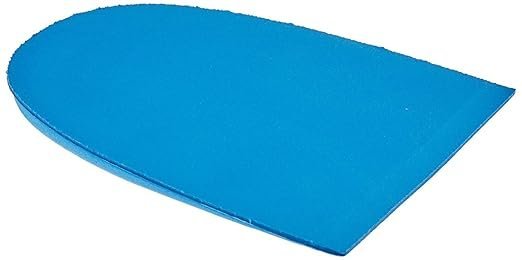
The AliMed Achilles Boot Wedge is a purpose-built peel-away hindfoot wedge that fits inside most closed-heel walking boots, converting a standard CAM walker into a controlled plantarflexion boot. The foot is initially positioned at approximately 30 degrees of plantarflexion, and layers are peeled away progressively to reduce the angle as healing advances — matching the standard conservative and post-surgical Achilles tendon repair protocol.
This is the clinician-grade option used in hospital and physiotherapy settings. If your boot did not come with internal wedges and your protocol calls for progressive plantarflexion reduction, this is the appropriate product. Use only under clinician direction — the number of layers to remove and the timing of each reduction should be prescribed, not self-determined.
- Purpose-built for Achilles boot protocols
- Peel-away design — precise staged reduction
- Clinician-grade — used in hospital settings
- Fits most major CAM walker brands
- Must be used under clinical direction
- Higher cost than standard heel lifts
- Not for use in shoes — boot only
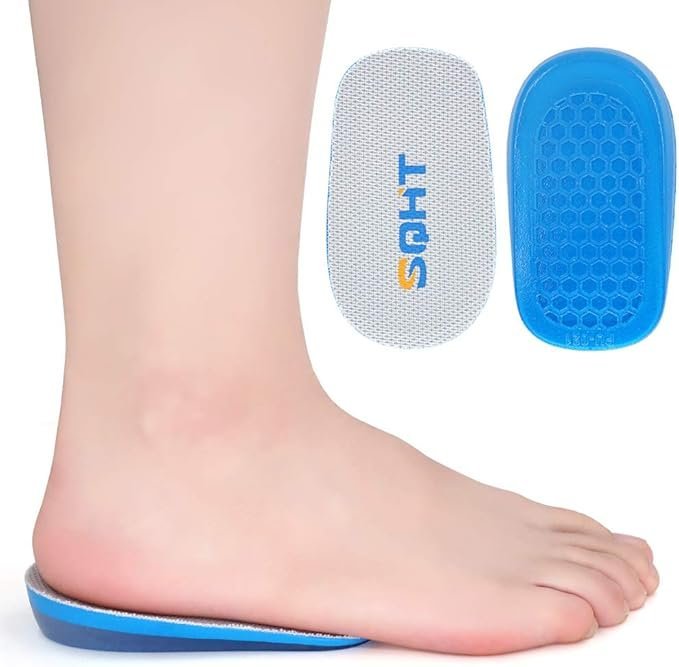
The SQHT stackable heel lifts are a highly regarded option for the post-boot transition phase, offering two heights (approximately 10mm and 35mm) with a stackable design that allows incremental height adjustment. For Achilles recovery, the 10mm option is the appropriate starting point for most patients transitioning from the boot — providing meaningful heel elevation without requiring excessively roomy footwear.
The non-slip base prevents the insert from migrating forward inside the shoe. The firm EVA construction maintains its height under load rather than compressing flat. Available in multiple sizes. Buy two pairs — one for each foot — as heel lifts must be worn bilaterally to prevent a leg length discrepancy during the transition phase. The stackable design allows progressive height reduction by removing layers rather than buying multiple different products.
- Adjustable height — progressive reduction possible
- Firm — maintains height under load
- Non-slip base — stays in place
- Well-reviewed by post-Achilles patients
- Multiple size options
- Buy two pairs for bilateral use
- 35mm option requires roomy footwear
- Not for boot interior use
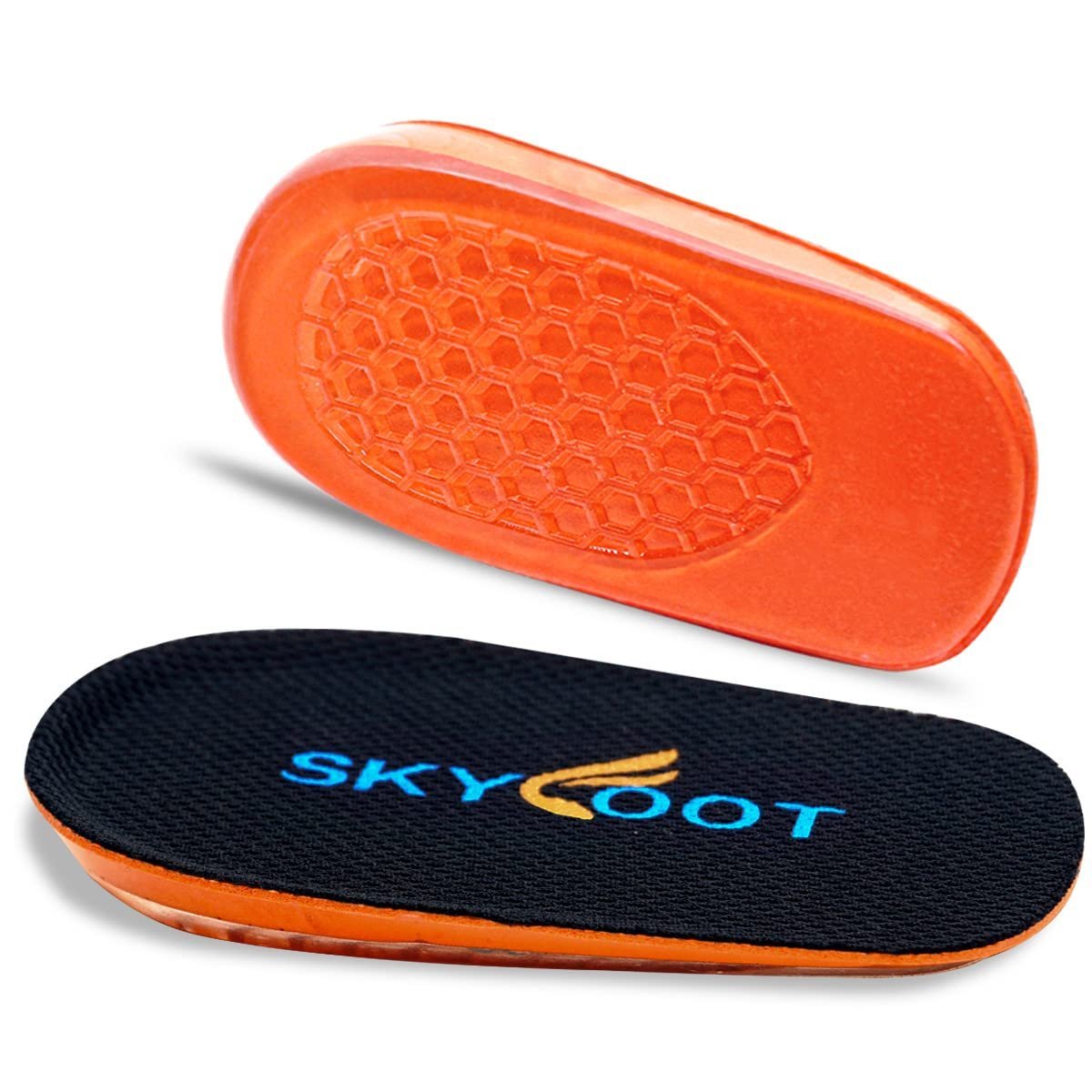
Gel or silicone heel lift inserts — such as those from Skyfoot or similar medical-grade silicone brands — provide softer, more cushioned heel elevation compared to firm EVA options. The self-adhesive base prevents forward migration and the low-profile design sits discreetly in most footwear including dress shoes where a bulkier EVA insert would not fit.
The trade-off is compression under load — silicone gel compresses more than firm EVA, meaning the effective elevation is lower than the advertised height after bearing weight. For the late transition phase (where the required lift height is modest and comfort is the priority), gel lifts are an appropriate and comfortable option. They are generally not the right choice for the immediate post-boot phase where consistent, uncompressed elevation height is critical.
- Soft and comfortable — less heel pressure
- Fits in dress shoes and low-profile footwear
- Self-adhesive — stays in place
- Good for late transition phase
- Compresses under load — inconsistent height
- Not ideal for early post-boot phase
- Adhesive can degrade over time
- Less durable than EVA
Side by Side
| Option | Phase | Height control | Compression resistance | Shoe compatible | Price |
|---|---|---|---|---|---|
| AliMed Boot Wedge | Boot phase only | ✓ Peel-away stages | ✓ Firm | Boot only | $$ |
| SQHT Stackable | Post-boot shoe phase | ✓ Stackable layers | ✓ Firm EVA | ✓ Athletic shoes | $ |
| Gel / Silicone | Late transition / comfort | Fixed height | Compresses under load | ✓ Most shoes incl. dress | $ |
Heel lifts must be worn bilaterally — in both the affected and unaffected shoe — during the post-boot transition phase. A lift in only the affected shoe creates a leg length discrepancy with every step, loading the hip, lower back, and knee on the opposite side in ways they are not designed to sustain. Buy two pairs and replace both at the same time when reducing height.