When you transition out of the walking boot, footwear becomes one of the most important variables in your recovery. The wrong shoes increase Achilles load. The right ones protect the tendon while it continues to mature — which takes months, not weeks.
In this article
Quick answer
HOKA Bondi is the most widely recommended shoe for Achilles recovery — its meta-rocker sole reduces push-off demand and the high cushioning stack absorbs impact well. If you want something more versatile for everyday and work wear, the Brooks Ghost or ASICS Gel-Nimbus are strong alternatives with clinically appropriate heel drop. The New Balance Fresh Foam 1080 is the best option if you prioritise a softer, more cushioned ride.
- What Actually Matters
- The Comparison
- Side by Side
- What to Avoid
- Common Questions
What Actually Matters
Two features matter above all else when choosing footwear for Achilles recovery: heel drop and sole geometry. Everything else is secondary.
Note — Phase 1 Only
The shoes on this page are appropriate for the early recovery phase out of the boot (8–12mm drop). As recovery progresses, a gradual reduction toward zero drop is the long-term goal. See the three-phase footwear guide →
Heel drop — 8–12mm for early recovery
Heel drop is the height difference between the heel and forefoot of the shoe. A higher heel drop reduces the stretch placed on the Achilles tendon during walking. During early recovery, 8–12mm is appropriate — this is why heel lifts are used when winding down from the boot. Zero-drop shoes should be avoided in the early phase, but are a viable long-term goal once the tendon has fully remodelled. See our article on
why zero drop is the long-term target →
Rocker sole geometry
A rocker sole curves upward at the toe, allowing the foot to roll through the gait cycle without requiring the Achilles to generate push-off force. This is the defining feature of HOKA's design and is the primary reason they are so commonly recommended in Achilles rehabilitation contexts — they actively reduce tendon demand during walking.
Cushioning stack height
A higher cushioning stack absorbs more impact and provides a greater buffer between the foot and the ground. During recovery, when the tendon is still maturing and load tolerance is limited, more cushioning is generally better. Maximum-cushion shoes from HOKA, ASICS, and New Balance provide this consistently.
Stability and width
After weeks in a walking boot, calf strength and proprioception are significantly reduced. A stable, wider platform reduces the lateral instability that can stress the ankle and Achilles during early walking. Avoid narrow, unstable shoes during the first months out of the boot.
When to start thinking about footwear
Footwear becomes relevant when your treating team begins discussing boot wean — typically from around weeks 8–12 depending on your protocol. It is worth having the right shoes ready before you need them, rather than scrambling after the boot comes off. The transition from boot to shoe is one of the most load-sensitive phases of recovery.
The Comparison
4mm heel drop
Meta-rocker sole
Maximum cushioning
Wide platform
Men's & women's
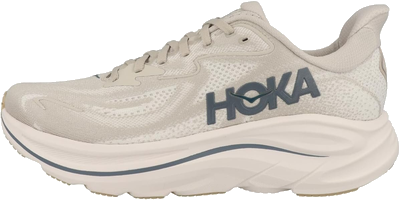
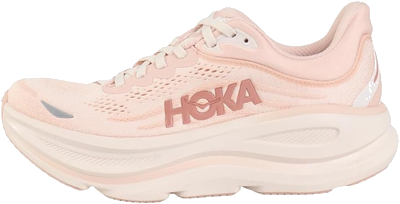
The HOKA Bondi is the shoe most frequently mentioned in Achilles rehabilitation contexts — by physical therapists, sports medicine physicians, and orthopedic surgeons. The reason is the meta-rocker sole, which curves upward at the toe and allows the foot to roll through the gait cycle without the Achilles needing to generate significant push-off force. This is the single most protective feature a shoe can offer during Achilles recovery.
The Bondi's cushioning stack is among the highest available in a running shoe, providing excellent impact absorption on a tendon that is still in the maturation phase. The wide, stable platform addresses the proprioceptive deficits that follow weeks of boot wear. The 4mm heel drop is lower than some alternatives — but the rocker geometry compensates by reducing functional demand on the tendon. Most users find the Bondi comfortable from the first wear, which matters when you are navigating a recovery that requires consistent, daily use.
Strengths
- Meta-rocker sole reduces Achilles push-off demand
- Maximum cushioning stack
- Wide, stable platform
- Consistently recommended in rehab contexts
- Comfortable from first wear
Considerations
- 4mm drop — lower than some alternatives
- Chunky appearance — not suited to all workplaces
- Higher price point
- Runs narrow in some sizes
Shop HOKA Bondi on Amazon →
12mm heel drop
DNA Loft cushioning
Neutral support
Versatile styling
Men's & women's
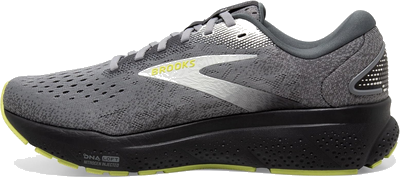
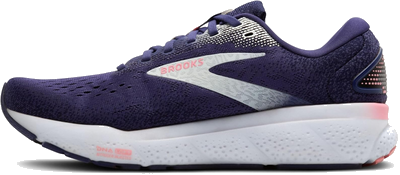
The Brooks Ghost offers the highest heel drop of the four shoes in this comparison at 12mm — which is clinically relevant because a higher heel drop places the Achilles tendon in a more shortened position during walking, reducing tensile load. For patients who need a shoe that works in a professional or everyday context as well as for walking, the Ghost is a strong choice. It lacks the aggressive rocker geometry of HOKA, but compensates with a heel drop that is among the most protective available in a mainstream running shoe.
The DNA Loft cushioning provides a soft, responsive ride and the Ghost's neutral support profile suits the majority of foot types. It has a more conventional appearance than the Bondi, making it easier to wear in office and professional settings during the period when you are not yet ready to be back in your regular shoes.
Strengths
- 12mm heel drop — most protective in category
- Versatile appearance for work and everyday
- Consistent quality across model updates
- Good cushioning and comfort
Considerations
- No rocker sole geometry
- Less cushioning stack than Bondi
- Less specialist for recovery than HOKA
Shop Brooks Ghost on Amazon →
8mm heel drop
FF Blast+ cushioning
Gel technology heel
Wide toe box
Men's & women's
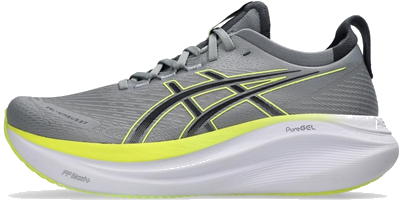
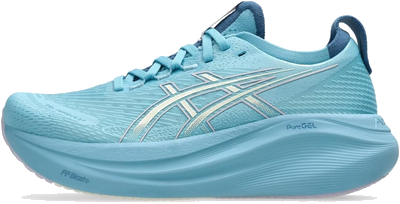
The ASICS Gel-Nimbus is ASICS's maximum-cushion flagship and has a long history of use in rehabilitation and post-injury contexts. The 8mm heel drop sits within the appropriate range for Achilles recovery. The combination of FF Blast+ foam and the Gel heel insert provides excellent impact absorption — particularly useful during the early weeks out of the boot when every step involves a degree of load negotiation for the healing tendon.
The Gel-Nimbus has a wider toe box than many running shoes, which is appreciated by patients whose foot volume has changed after weeks in a boot. It is a reliable, well-reviewed shoe with a strong track record in tendon rehabilitation contexts.
Strengths
- Excellent impact absorption
- Wide toe box — accommodates post-boot foot
- Long track record in rehabilitation
- 8mm heel drop — within recommended range
Considerations
- No rocker sole geometry
- Slightly lower drop than Brooks Ghost at 12mm
- Heavier than some alternatives
Shop ASICS Gel-Nimbus on Amazon →
6mm heel drop
Fresh Foam X midsole
High stack height
Engineered mesh upper
Men's & women's
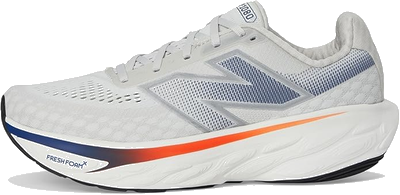
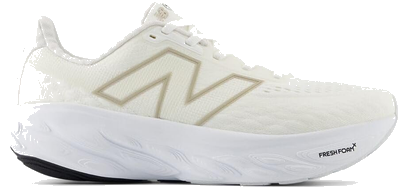
The New Balance Fresh Foam 1080 delivers one of the softest, most cushioned rides available in a mainstream running shoe. The Fresh Foam X midsole is engineered for maximum plushness and the high stack height provides excellent ground separation. The 6mm heel drop is lower than ideal for early Achilles recovery — this is the one caveat. For patients who are further along in their recovery (4+ months out of the boot) or who need to pair the shoe with a heel lift insert for the first few months, the 1080 is an excellent choice.
The engineered mesh upper is breathable and accommodating, which is appreciated after weeks of restrictive boot wear. The 1080 is frequently cited as one of the most comfortable long-distance walking shoes available, making it a strong option for patients returning to longer daily activity.
Strengths
- Exceptional cushioning and comfort
- High stack height
- Breathable, accommodating upper
- Strong for longer distance walking
Considerations
- 6mm drop — use with heel lift early on
- No rocker sole geometry
- Better suited to mid-late recovery
Shop New Balance 1080 on Amazon →
Side by Side
| Shoe |
Heel drop |
Rocker sole |
Cushioning |
Best phase |
| HOKA Bondi |
4mm |
✓ Meta-rocker |
Maximum |
Boot wean onwards |
| Brooks Ghost |
12mm |
— |
High |
Boot wean onwards |
| ASICS Gel-Nimbus |
8mm |
— |
Maximum |
Boot wean onwards |
| NB Fresh Foam 1080 |
6mm |
— |
Maximum |
Mid-late recovery |
What to Avoid
These shoe types increase Achilles tendon load and should be avoided during the recovery period.
✕
Zero-drop / minimalist shoes
Places the Achilles under maximum stretch during walking. Increases tendon load significantly compared to elevated heel footwear. Avoid entirely during recovery.
✕
Thongs and flat sandals
No heel elevation, no stability, no cushioning. Among the worst options for a recovering Achilles tendon. Common cause of setbacks in early recovery.
✕
Barefoot walking
Walking barefoot removes all heel elevation and cushioning. Minimise barefoot time during recovery — even short trips to the bathroom at night count.
✕
High heels
While elevated, high heels create instability and place excessive demand on the calf-Achilles complex. Not appropriate during recovery.
✕
Canvas sneakers (e.g. Converse)
Flat, minimal cushioning, no heel drop. Despite being common everyday shoes, these are inappropriate during Achilles recovery.
✕
Worn-out shoes
Compression of the midsole reduces effective heel drop and cushioning. Shoes you have been wearing for a long time may not provide the properties advertised on the box.
Common Questions
When should I start thinking about footwear? When your treating team begins discussing boot wean — typically around weeks 8–12. Have the shoes ready before the boot comes off rather than scrambling afterwards. The transition phase is one of the most load-sensitive points in recovery.
Do I need heel lifts as well as recovery shoes? Possibly, particularly in the first weeks after boot wean. A heel lift inside an already-elevated shoe provides additional protection during the most sensitive phase of the transition. Most people wean off heel lifts over 2–3 months as tendon tolerance improves.
Can I return to my normal shoes eventually? Yes — the goal is a full return to normal footwear over time. The timeline varies by individual, injury severity, and rehabilitation progress. A gradual reduction in heel drop — from recovery shoes to everyday shoes to eventually lower-drop options — is the general approach over 12–18 months.
Are these shoes available outside the US? All four brands — HOKA, Brooks, ASICS, and New Balance — are globally distributed and available in Australia, the UK, Canada, and most English-speaking markets. The Amazon links above will redirect to your local store where available.
Back to Equipment Guide
General health information only — not medical advice. Footwear recommendations are based on published clinical guidance and biomechanical research. Individual needs vary — if you have specific foot or gait concerns, a podiatrist or physical therapist can provide personalised assessment.
Affiliate disclosure: This page contains affiliate links. If you purchase through one of these links, The Achilles Hub may earn a small commission at no additional cost to you. This does not influence which products are included or how they are assessed.