General health information only. This site does not provide medical advice and does not replace the guidance of a qualified healthcare professional. About this site →
Achilles Tendon Rupture

The definitive guide to recovery

Evidence-based information on diagnosis, treatment decisions, rehabilitation, equipment, nutrition, and mental health — for everyone navigating an Achilles tendon injury. Compiled from peer-reviewed clinical literature. General information only.

612
Months to return to full activity
3.67%
Re-rupture risk (conservative)
65100%
Return to sport rate
72hr
Critical treatment window
Understanding the injury

The Achilles tendon

The Achilles tendon is the strongest and largest tendon in the human body. It connects the gastrocnemius and soleus calf muscles to the calcaneus (heel bone), and is responsible for plantarflexion — the movement that powers walking, running, and jumping.

Ruptures most commonly occur 2–6cm above the heel insertion point, in a zone of relatively poor blood supply. This is why healing is slow and why the early weeks of immobilisation are critical.

The Achilles tendon can withstand forces of up to 12.5 times body weight during running
Peak incidence of rupture is in men aged 30–50, typically during recreational sport
97% of ruptured tendons show signs of pre-existing degeneration at the time of rupture (Kannus & Józsa)
Rupture incidence has increased approximately 10-fold over the past three decades
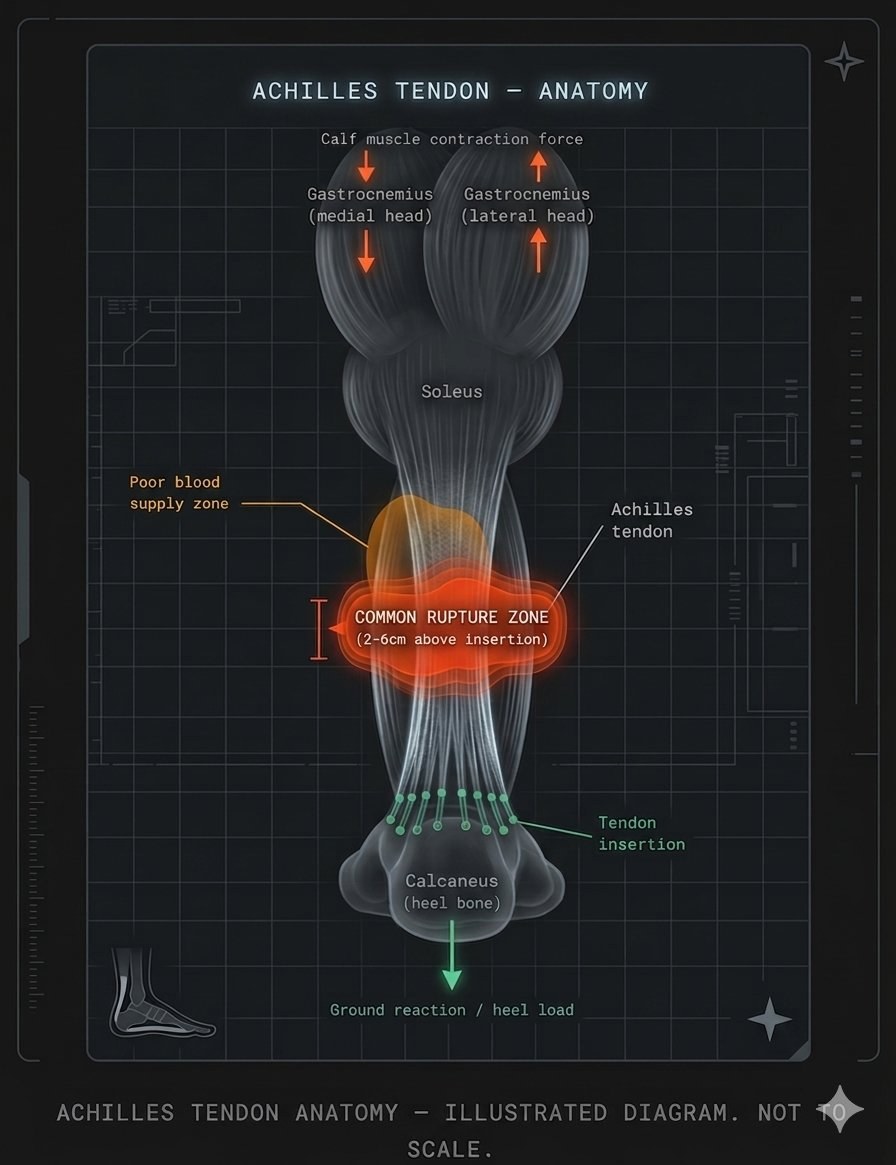
Achilles tendon anatomy diagram showing gastrocnemius, soleus, common rupture zone 2-6cm above insertion, and calcaneus
Medical rehabilitation setting
Diagnosis & treatment
Physical therapy session
Rehabilitation
Recovery and wellbeing
Mental health & recovery
Resource library

Every question.
One place.

Each page answers one specific question people ask when navigating an Achilles tendon injury. Compiled from peer-reviewed literature and published clinical guidelines. General information only.

01
Diagnosis
How do I know if I've ruptured my Achilles?

Symptoms, the Thompson test, similar conditions, and what clinical guidelines say about when to seek emergency care.

02
Treatment
Surgery vs conservative treatment — what does the evidence show?

A balanced summary of published research on both pathways, re-rupture rates, and the questions to raise with your orthopaedic surgeon.

03
Diagnosis
How long after injury can surgery be performed?

What clinical literature says about the 72-hour window, delayed presentation, and the implications for treatment options.

04
Equipment
What type of boot is used — and does it matter?

An evidence-based overview of immobilisation types — plaster cast, wedge boot, hinged equinus boot — and what the research actually shows.

05
Equipment
Complete equipment guide for Achilles rupture recovery

Everything from mobility aids to shower covers — what's commonly recommended, what's worth buying, and what to hire instead.

06
Rehabilitation
What is the Achilles rupture recovery timeline?

A phase-by-phase overview of the typical recovery trajectory, from acute injury through return to full activity.

07
Rehabilitation
How do I find a good physiotherapist for Achilles rupture?

What to look for, questions to ask at a first appointment, and red flags that suggest a physio may not be the right fit.

08
Daily Life
Can I drive with an Achilles rupture?

Legal considerations, practical guidance on automatic vs manual vehicles, and what clinicians commonly recommend.

09
Daily Life
How do I shower with an Achilles rupture?

Waterproof covers, technique, products, and practical tips for managing personal hygiene while non-weight bearing.

10
Nutrition
What supplements may support Achilles tendon healing?

An evidence-graded review of commonly discussed supplements including collagen peptides, Vitamin C, creatine, and omega-3.

11
Mental Health
Depression and anxiety after Achilles rupture

Why this injury has a significant psychological dimension, what research shows about fear of re-injury, and where to find support.

12
Specialists
How do I find the right orthopaedic surgeon in Australia?

What sub-specialisation to look for, how to find foot and ankle surgeons in Australia, and what to ask at your first consultation.

About this site

Built by
someone in it.

"The information I needed most was scattered across research papers, Reddit threads, and clinician websites that contradicted each other."

The Achilles Hub was built by someone navigating an Achilles tendon rupture in real time — frustrated by the gap between what clinical literature says and what most health websites actually tell you.

Every page is compiled from peer-reviewed research and published clinical guidelines. Sources are cited. Information is distinguished clearly from advice. Nothing is written to sell you something — affiliate links are clearly disclosed where they exist.

About this site →

Editorial principles

Medical disclaimer: The Achilles Hub provides general health information only, compiled from peer-reviewed medical literature and published clinical guidelines. It does not constitute medical advice and does not create a clinical or professional relationship between the reader and this website. It should not be used to self-diagnose, self-treat, or make treatment decisions without consulting a qualified healthcare professional. If you believe you have sustained an Achilles tendon rupture, please seek professional medical assessment promptly. Some links on this site are affiliate links — purchases made through these links may earn this site a small commission at no additional cost to you. Affiliate relationships do not influence the information published on this site. Full disclaimer →

Articles & Insights

Research, News & Explainers

View all articles →
Explainer
Why Are Achilles Ruptures Increasing?

A 3–5x rise over 25 years across multiple countries. The weekend warrior effect, ageing active populations, fluoroquinolone antibiotics, and more — what the epidemiology actually shows.

April 2025 · 8 min read
3–5×